
Testosterone On The Front Lines: The Real Medical Science Behind The Pentagon New Screening Policy
The intersection of military policy and endocrine science took a sharp turn when U.S. Defense Secretary Pete Hegseth announced a sweeping new directive. Dubbed the “High-T Department of War” initiative, the policy mandates that active-duty service members aged 30 and older undergo annual testosterone deficiency screenings as part of their standard Periodic Health Assessment. While troops under 30 can opt in voluntarily, those testing below standard baselines will be encouraged though not forced to access Testosterone Replacement Therapy (TRT).

Hegseth framed this strategy around modern battlefield readiness, stating it is about ensuring troops have the optimal biological foundation to operate at their absolute best.
For clinicians, this policy marks a massive, real-world experiment in population health. For the general public, it thrusts a long-misunderstood hormone back into the cultural spotlight. To understand whether this policy is a breakthrough for human optimization or a clinical misstep, we have to look at the science behind the "warrior ethos" and nobody understands that science better than Dr. Mohit Khera.
From the Battlefield to the Clinic: Dr. Mohit Khera on TRT
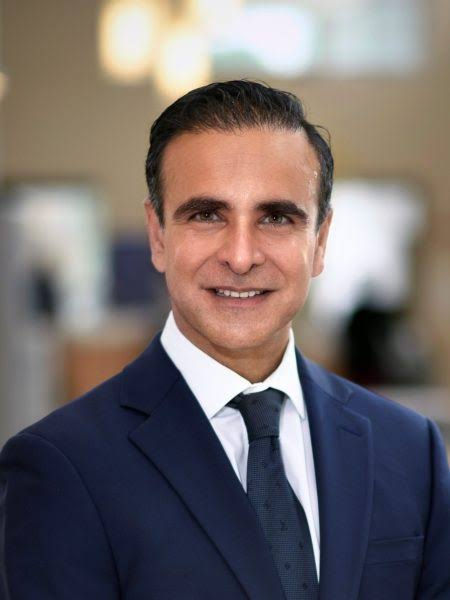
Dr. Mohit Khera, a professor of urology at Baylor College of Medicine and a leading expert in male sexual dysfunction, views testosterone through a fundamentally different lens than the Pentagon. While policymakers talk about "lethality", Dr. Khera talks about systemic health. He frequently notes that a drop in testosterone behaves like a body's "check engine light," warning of deep-rooted physiological or psychological distress.
Through years of clinical research, Dr. Khera has mapped out the wide-ranging benefits of treating true hypogonadism (clinically low testosterone):
Metabolic and Body Composition Restructuring: Low testosterone is heavily tied to obesity, insulin resistance, and metabolic syndrome. Dr. Khera’s work shows that optimizing T levels helps reduce visceral fat deposition while actively rebuilding lost muscle mass.
Sexual Wellness and Intimacy: TRT consistently restores a severely diminished libido (sex drive) and improves mild erectile dysfunction, often enhancing the efficacy of standard therapies like PDE5 inhibitors when used together.
Cognitive and Emotional Stability: Beyond the physical benefits, treating low testosterone has been shown to alleviate chronic fatigue, improve mental focus, and reduce symptoms of depression and irritability in men with confirmed deficiencies.
The Turning Point: Dismantling the Safety Myths
Historically, widespread medical adoption of TRT was halted by major safety concerns regarding the prostate and the heart. Dr. Khera has been instrumental in overturning these outdated dogmas.
The Prostate Cancer Myth
For decades, medicine feared that testosterone therapy would cause or fuel prostate cancer. Dr. Khera’s research helped establish the modern "saturation model," showing that therapeutic testosterone does not increase the risk of prostate cancer or its recurrence.
The Cardiovascular Verdict
The biggest milestone came with the landmark TRAVERSE Trial, a massive, multi-center, randomized, double-blind study of 5,246 men aged 45 to 80 with preexisting cardiovascular risk and low testosterone. Dr. Khera was a prominent contributor to this trial, which proved conclusively that properly managed TRT is non-inferior to a placebo regarding major adverse cardiac events like strokes or heart attacks. This monumental data was so compelling that it led the FDA to officially remove the cardiovascular risk warning from the "Black Box" labeling on testosterone products, reshaping the clinical landscape.
A Note from Claude Fourie, Sexological Educator and Researcher
As a sexological educator and researcher, I view the Pentagon’s new initiative with a mix of clinical optimism and deep structural caution. Dr. Khera’s work proves that when TRT is applied to clinically deficient individuals, the holistic transformation spanning metabolic health, emotional stability, and sexual vitality is profound. Sexual wellness is a cornerstone of human well-being, and removing the historical stigmas around hormone optimization is a massive step forward.However, we must separate clinical optimization from political posture. Testosterone levels fluctuate naturally based on stress, sleep, nutrition, and even immediate environmental stimuli. Deploying blanket, mandatory testing across an entire population based on age alone, rather than individual symptomatic presentation, flirts with over-medicalization. Furthermore, we cannot ignore the demographic reality: over 231,000 women serve on active duty. Hormonal health is not a male-only domain, and if the goal is truly operational readiness, we need a comprehensive approach that addresses endocrine health across all genders equitably.
The Clinical Crossroads
The debate sparked by the "High-T Department of War" highlights a vital distinction for both clinicians and the public: reversing a medical deficiency is not the same as elective, lifestyle enhancement.
As Dr. Khera routinely emphasizes during professional plenaries, modality matters. He strongly advocates for stable delivery methods, such as topical gels, which mimic the body’s natural circadian rhythm and avoid the dangerous, supraphysiologic peaks often caused by irregular injections.
The Pentagon's initiative will undoubtedly yield an unprecedented mountain of data on mass endocrine tracking. But as we move forward into this new era of proactive hormone management, our guiding light must remain rooted in rigorous, evidence-based patient selection and careful monitoring ensuring we are treating the unique person, not just chasing a number on a lab report.
For a deeper look into the medical evolution of hormone safety, you can watch this Testosterone and Cardiovascular Risk Presentation where Dr. Khera details how the TRAVERSE trial fundamentally changed the FDA's regulatory stance on testosterone safety.



Comments